High-tech interior design: a tech-forward apartment without the chill or the 2000s look
High-tech interior design for an apartment: gloss, metal, glass, hidden lighting and smart home. How to avoid a cold office look or a 2005 interior.
High-tech interior design is smooth surfaces, metal, glass, built-in appliances and carefully planned lighting, where technology becomes part of the design. In an apartment it looks fresh when gloss covers one or two surfaces, the metal is brushed, the lighting is warm and hidden, and the cables run inside the walls. What turns it into a cold office or a 2005 interior is chrome everywhere, blue LED strips and glass furniture at every turn.
What is high-tech style and where did it come from?
High-tech came from architecture. The style took shape in the 1970s, and its best-known building is the Centre Pompidou in Paris (1977, architects Renzo Piano and Richard Rogers) (Wikipedia). Its pipes, stairs and ventilation were moved outside, onto the facade. The name comes from "high technology".
Three ideas moved from these buildings into apartments: materials show honestly what they are (steel, glass, plastic), shapes are straight and simple, and technology works in plain sight and serves as decoration itself. Carving, ornament, patina and grandma's heirlooms have no place here.
In Russian apartments of the 2000s, high-tech often meant black-and-red glossy kitchens, glass tables on chrome legs and multi-level ceilings full of spotlights. That's why many people distrust it today, even though the style has changed a lot in twenty years.
How do you avoid a 2005-style interior?
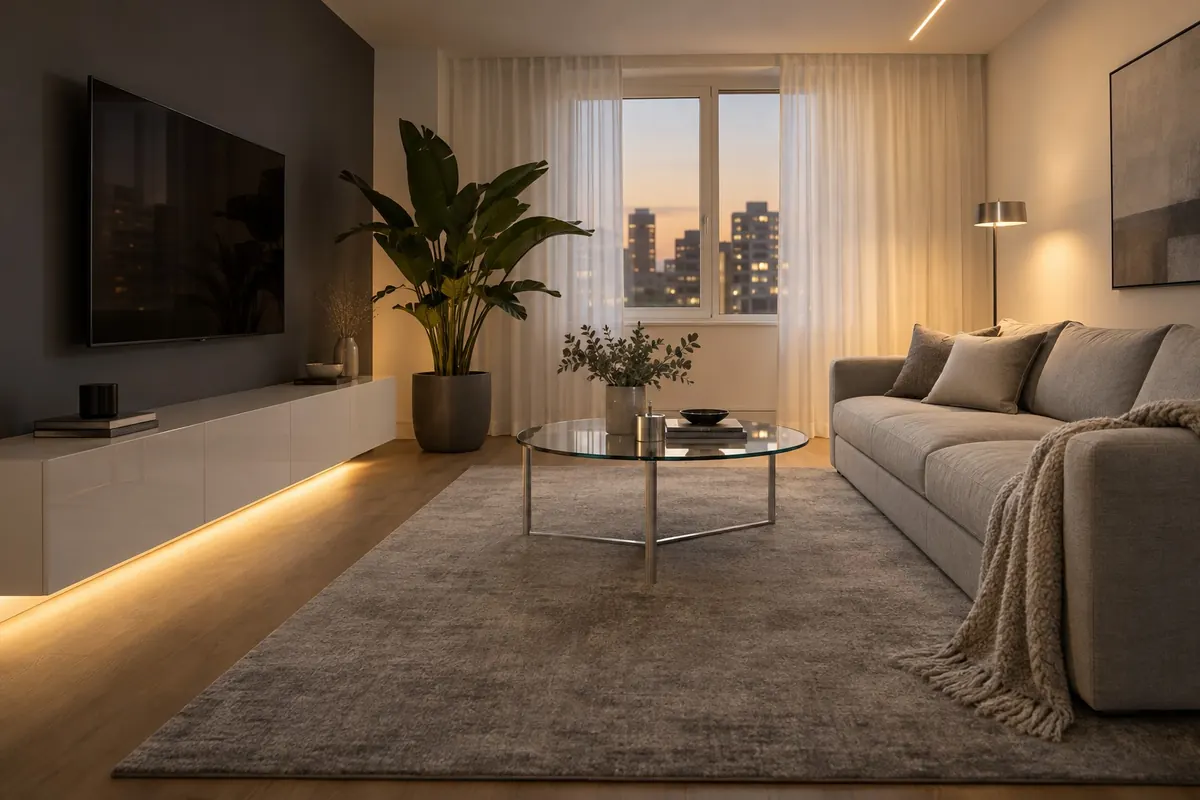
What ages in high-tech is the details. Compare how it was done then and how it's done now.
| Element | High-tech in 2005 | High-tech today |
|---|---|---|
| Gloss | on every cabinet front, the ceiling and the floor | one or two surfaces, matte next to them |
| Metal | shiny chrome everywhere | brushed steel, aluminum, black or graphite metal |
| Accent lighting | blue or color-changing LED strip | a warm white line with a hidden source |
| Ceiling | two or three drywall levels, rows of spotlights | a flat ceiling, track lights or a recessed light line |
| Glass | glass furniture, frosted partitions with patterns | glass in a few places: a tabletop, a partition, a display cabinet door |
| Color | black with red, silver | white, gray, graphite and one calm accent |
| Electronics | on display, cables along the wall | built in, cables inside the wall or in a furniture cable channel |
Put three or four items from the left column in one room and it looks like a renovation from an old magazine. One such item usually doesn't spoil the picture if everything else comes from the right column.
How to do high-tech in a regular apartment
High-tech doesn't need high ceilings or large windows, so it fits a standard apartment well. Flat walls and clean geometry matter more.
Walls, floor and ceiling
Paint the walls smoothly in white, light gray or graphite. Textured wallpaper and relief plaster don't suit this style. For the floor, use large porcelain tiles with a concrete or stone look, luxury vinyl, or laminate in a calm gray or light tone without prominent knots. Keep the ceiling smooth and light. If you choose a stretch ceiling, matte looks calmer than glossy, especially in the bedroom.
Gloss
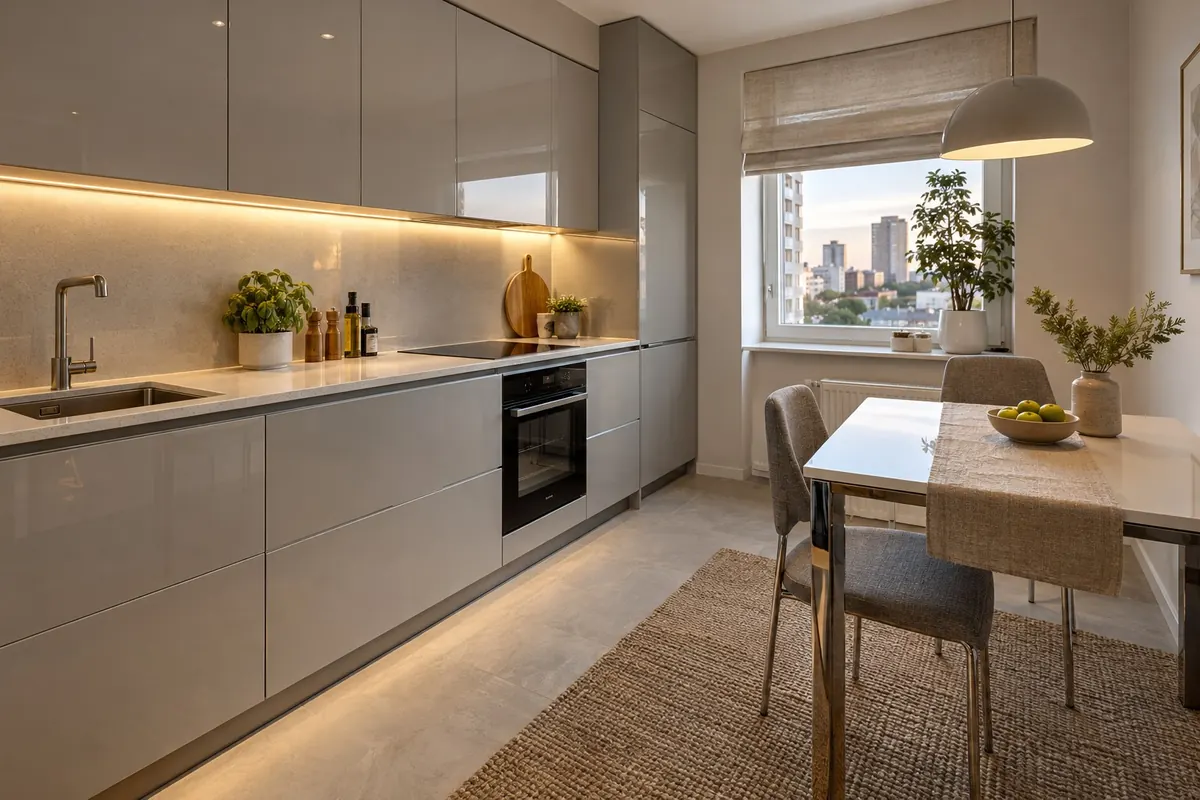
Gloss gives the style its shine, but it needs care. Roskachestvo, the Russian quality agency, says glossy cabinet fronts "require frequent care," while matte ones show less dirt (Roskachestvo). Fingerprints and dust show up on gloss right away. That's why it goes where hands touch it less: upper kitchen cabinets, the TV console, handleless wardrobe doors. Lower kitchen cabinets and doors you open a hundred times a day are safer in matte.
Metal and glass
There isn't much metal, but it stands out: table legs, a floor lamp, the faucet, a sliding door frame, handles. Pick one finish and keep it throughout the room.
For glass furniture, choose tempered glass. It breaks into many small fragments with blunt edges, and its weak spot is an impact on the edge (Wikipedia, in Russian). The same source says tempered glass can't be cut or drilled. So the size and the holes for fittings are ordered up front: you won't be able to adjust it on site.
Accent lighting
Accent lighting is one of the main tools of high-tech, and it's almost always hidden. Light lines go under the wall cabinets, under a floating console, along a niche, under the bed base. The source sits inside a profile, so the wall shows only an even glow. For living spaces, choose warm or neutral white, 3000-4000 K. Keep cool light for the work zone if you find it more comfortable there. How to split light into layers and switches is covered in our article on lighting.
Smart home
High-tech and smart home often go together, but you don't have to start with an expensive system. Smart bulbs, plugs and battery-powered sensors go into a finished renovation in an evening. Anything hidden in the walls is decided at the rough-in stage: wiring for lighting scenes, niches for the router and hub, outlets behind the TV, cable channels in furniture. Many smart switches need a neutral wire in the wall box, so choose the model before the electrical work.
How do you keep the apartment from feeling like a cold office?
A room feels cold when gloss and metal sit on a bare floor under cool light. Usually it's enough to balance that with soft, warm things:
- A solid-color wool or short-pile rug under the sofa or bed area.
- Upholstery in canvas weave or boucle, heavy floor-length curtains, a wool throw. Leather works, but not on every chair at once.
- Smooth wood without patina: light oak on the floor or dark veneer on one console. High-tech purists dislike wood, but in an apartment it takes away the "sterile" feel.
- A separate evening lighting scene: the overhead light is off, the accent lights and the floor lamp are on, all warm.
- A large plant in a simple pot reads like a sculpture against gloss and metal.
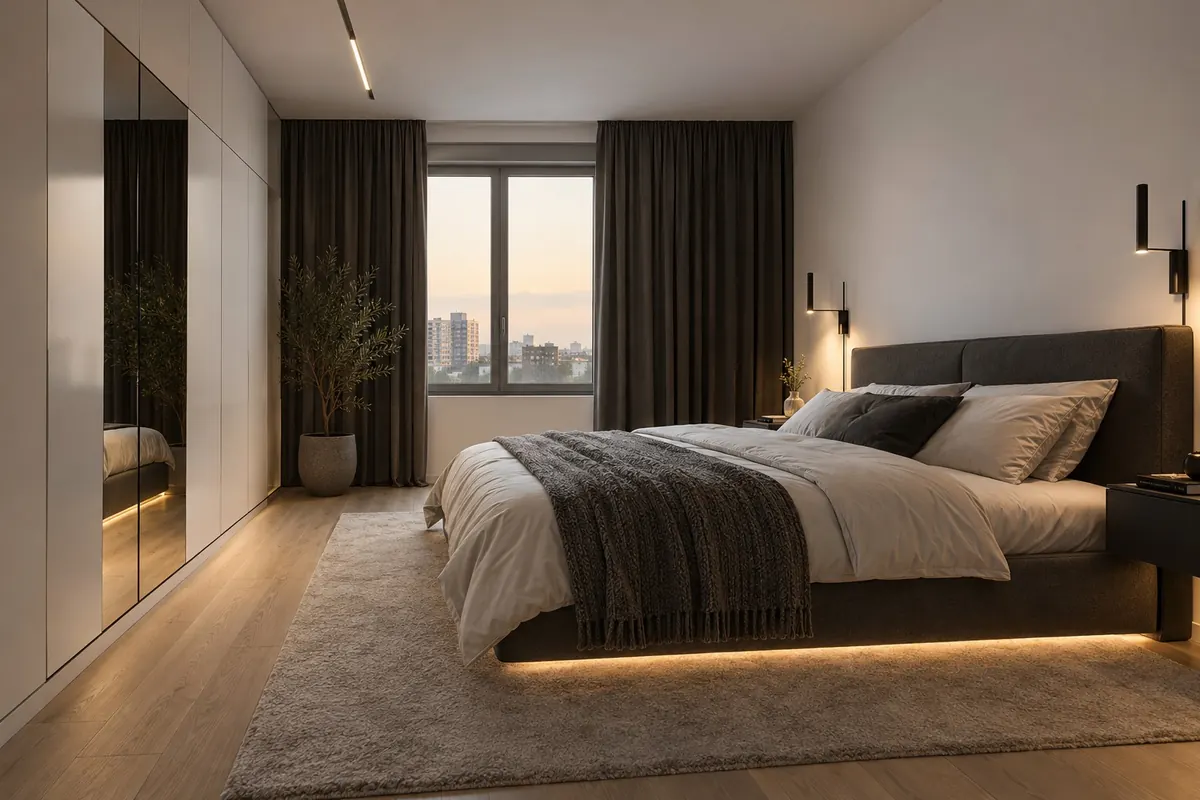
The bedroom has a stricter rule: gloss and mirrors facing the bed reflect every little light. A wardrobe with mirrored doors works better on a side wall.
How is high-tech different from minimalism, loft and brutalism?
All four styles like gray, straight lines and few things. What sets them apart is how they treat metal, shine and technology.
| Feature | High-tech | Minimalism | Loft | Brutalism |
|---|---|---|---|---|
| Metal | brushed or polished, noticeable | barely visible | black, rough, with signs of age | dark, in two or three spots |
| Shine | gloss and glass | matte and satin | matte, aged | matte concrete |
| Technology | part of the design, with lights and screens | fully hidden | vintage bulbs, exposed pipes | hidden |
| Lighting | hidden lines, scenes | even and soft | bulbs on display, track | warm, grazing the wall texture |
| How it goes wrong | cold office | empty room | unfinished renovation | warehouse |
If you prefer quiet without shine, read about minimalism. If you like brick and pipes, see loft. If you're drawn to concrete and massive forms, take a look at brutalism. And the general "how people furnish today" base is in our article on modern style.
How to try high-tech on a photo of your room
Desow doesn't have a "High-tech" style. The closest one is Minimalism: the same smooth handleless fronts, closed storage, a light base and almost no decor. Minimalism has less metal, glass and gloss, so treat it as a base you add shine to later. If you want graphite and concrete restraint, run the same room through Brutalism. It's more matte and heavier than high-tech, but it shows the palette and the restraint.
- Take a photo of the room in daylight and hold the phone level. How to shoot a frame the AI understands is covered in our article on photographing a room.
- Upload the photo to Redesign and choose Minimalism. A version is usually ready in less than a minute, and Redesign works on a phone too.
- Add high-tech touches with Smart Edit: select the console and type "glossy white fronts," or select the table and type "glass tabletop on a metal base." The edit changes only the selected area. It works in a desktop browser.
One Redesign version costs 10 credits, a Smart Edit costs 7. The Free plan gives you free credits once at sign-up, enough for several room versions and edits.
Frequently asked questions
Is high-tech an outdated style?
What's outdated is its 2000s look: chrome everywhere, blue LED strips, multi-level ceilings and black-and-red gloss. The idea of smooth surfaces, built-in appliances and well-planned lighting still works, as long as there's little gloss and the light is warm.
Does high-tech work in a small apartment?
Yes, as long as you don't overdo the shine. Gloss and mirrors reflect light, built-in wardrobes hide things, and furniture without decor doesn't crowd the space. Keep glossy surfaces fewer than matte ones, or the room starts to look busy.
How is high-tech different from minimalism?
Minimalism hides technology and chooses matte surfaces, while high-tech shows technology off as decoration and likes metal, glass and gloss.
Can you do high-tech without a smart home?
Yes. The style rests on materials, geometry and light. A smart home adds convenience: lighting scenes, control of curtains and climate. Wireless bulbs, sensors and plugs can be added after the renovation. Wired smart switches are easier to install if you put a neutral wire in the wall boxes at the rough-in stage.
Key takeaways
- High-tech came from 1970s architecture: metal, glass, straight lines, technology as part of the design.
- To avoid the 2005 look, drop chrome everywhere, blue LED strips, multi-level ceilings and gloss on every surface.
- Gloss goes on fronts you rarely touch, metal sticks to one finish, glass is tempered only.
- A rug, fabric, a little smooth wood and warm evening light keep it from feeling cold.
- Desow has no "High-tech" style: try Minimalism as a base and add shine with Smart Edit.