Yellow in interior design: from cream to mustard, what to pair it with, how to paint walls and a kitchen
Yellow in interior design: cream, ochre, mustard and lemon, what to pair them with, how much yellow a room can take, north-facing rooms, kitchens and painting.
For apartment walls, a light and muted yellow works best: cream, straw or light ochre. Mustard looks good on a sofa, on curtains or on one wall. Lemon and canary yellow are kept for small things. On a wall, yellow almost always looks brighter than on the paint chip, so pick a paint one step lighter and calmer than the one you liked in the store.
The general rules of a palette, such as the 60-30-10 split, the light reflectance value (LRV) and window direction, are covered in our article on interior color combinations. This one is only about yellow: its shades, how to paint with it and how much yellow your room can take.
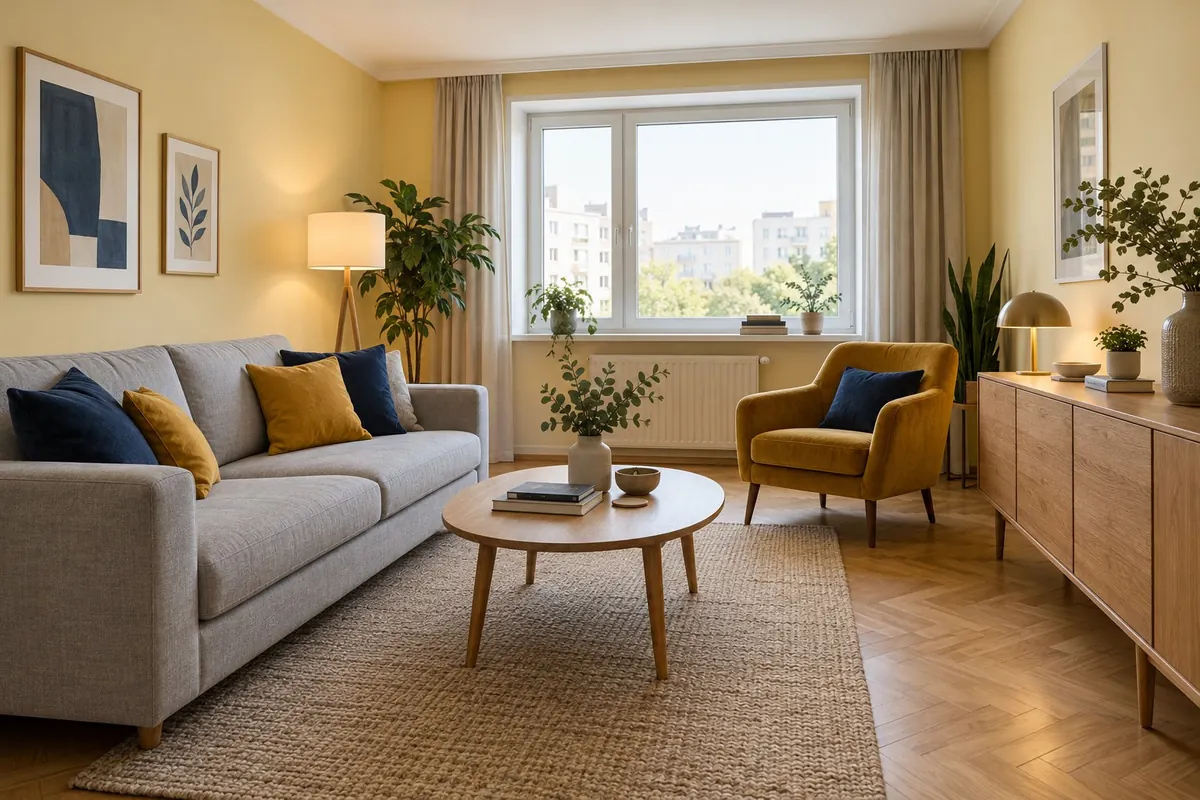
Shades of yellow: which one goes where
Light cream reads as a warm white, while pure lemon on a whole wall is too sharp for many people. The difference comes from the undertone, the color mixed into the paint, and from saturation.
| Shade | Undertone | How it looks on a wall | Where it fits |
|---|---|---|---|
| Cream, vanilla | beige, white | almost a warm white | all walls of a bedroom or living room, ceiling stays white |
| Straw, light yellow | clean and warm | sunny, noticeably brighter than the chip | living room, kitchen, windowless hallway |
| Ochre | brown, earthy | deep, warm, calm | one wall, kitchen, living room with wood |
| Mustard | green-brown | dense, muted | sofa, curtains, throw, wall behind the headboard |
| Lemon, canary | green or clean | very bright, turns greenish in cool light | dishes, chairs, a lamp, a kid's room in small doses |
Paint makers do not agree on names: one brand's "mustard" is closer to ochre, another's to khaki. Put the chip on a sheet of white paper and you will see where the color leans: green, brown or orange.
Cream and straw
Cream makes a room warmer, but nobody will call that room yellow. It differs from beige mostly in the evening, under lamps. If you simply need a light warm background, compare options using our articles on white and beige. Straw already reads as yellow. On all walls it works in a living room or kitchen, and in a bedroom it is balanced with a white ceiling and light textiles.
Ochre and mustard
Ochre is a natural pigment: iron oxide hydrate mixed with clay, ranging from light yellow to brownish yellow. Like other mineral pigments, it is lightfast (Wikipedia, "Ochre", in Russian). Its color is earthy and muted, and next to wood, linen and terracotta it usually looks natural. Terracotta has its own article on terracotta in interiors. Mustard is usually darker and greener than ochre. It shows up a lot in furniture from the middle of the last century and in the mid-century modern style.
Lemon and canary
Pure bright yellows are good in small areas: stools, a vase, a lamp. On a wall they quickly get tiring, and in cool daylight lemon turns greenish. Start a bright room with furniture and textiles; the rules of a dopamine interior will help you build a bold palette.
Why does a yellow wall turn out brighter than the sample?
The chip in the store looked calm, and the painted room came out canary yellow. Usually three things add up: the area, the lamps and the paint itself.
On a large surface, a shade usually looks lighter and more saturated than on a small sample (Finntella, "The area effect", in Russian). The same article recommends a test patch no smaller than a letter-size sheet. For yellow, which is bright even on the chip, this matters a lot.
In the evening, under warm lamps, yellow shifts toward orange and ochre toward rust. Cool light does the opposite: it takes away warmth and makes lemon greenish. Look at the test patch both in daylight and under your own lamps; how to choose the lamps themselves is covered in our article on interior lighting.
The third reason is hiding power. The paint store Paint-Center writes that the brighter and cleaner the color, the lower its hiding power, and saturated yellows often need 3-4 coats. The exact number depends on the paint and the surface. Under yellow, they recommend a primer tinted light yellow or creamy white (Paint-Center, in Russian). Budget for an extra can of paint from the start.
Yellow in north-facing and south-facing rooms
Yellow is often recommended for dark north-facing rooms. It works, but not with every shade.
- North. The light is even and cool. Warm yellows such as straw, ochre and cream with a beige undertone hold their color and make the room look lighter. Lemon and yellows with a green undertone look grayish green here.
- South and west. The sun adds yellow on its own. Straw walls can look too bright during the day. Cream, muted ochre or yellow only in textiles look better here.
- East. The room is full of light in the morning and runs on lamps in the evening. A middle option is ochre or mustard on one wall.
The floor adds warmth too: with orange-toned laminate, yellow walls make the whole room orange. With a floor like that, take cream or move the yellow into furniture. Gray laminate and light oak get along with yellow easily.
What colors go with yellow in interior design?
| Pair | How to split it | Where it works | Risk |
|---|---|---|---|
| Yellow + gray | gray walls or sofa, yellow in textiles | living room, bedroom | cool gray with lemon feels like an office |
| Yellow + navy | navy sofa or wall, mustard in cushions and curtains | living room, home office | two bright colors at equal strength compete |
| Yellow + white | white ceiling and upper cabinets, yellow walls or fronts | kitchen, kid's room | cool white makes yellow look sour |
| Yellow + black | yellow fronts, black handles, lamps, chairs | kitchen | too much black reads as a road sign |
| Ochre + olive, wood | ochre wall, olive textiles | living room, kitchen | without a light color the room gets dark |
| Mustard + pink, terracotta | pink background, a mustard piece | living room, bedroom | needs a light neutral background |
Mustard with navy and teal is a mid-century classic; more on that in our article on blue. Pairs with gray and green are covered in our articles on gray and green in interior design. Pink with yellow is a bold palette; softer versions of pink are described in our article on pink.
How much yellow to give a room
The shade depends on the role yellow plays in the room.
- Accent, about 10% under the 60-30-10 rule. Cushions, a vase, a lamp, a picture, kitchen chairs. Any shade works here, even lemon, and this is the cheapest way to find out whether you like the color.
- One large piece. A mustard sofa, curtains, a rug. Keep everything else neutral: light walls, wood, gray or blue textiles. A mustard sofa stands out more than yellow walls, so a second large yellow piece is usually too much.
- One wall. Ochre or mustard behind the sofa or the headboard. Usually this is the wall opposite the window, where the light falls evenly.
- The whole room. Light shades only: cream, light straw. Leave the ceiling white, or the yellow presses down from above and the room looks lower.
Yellow room by room
Kitchen
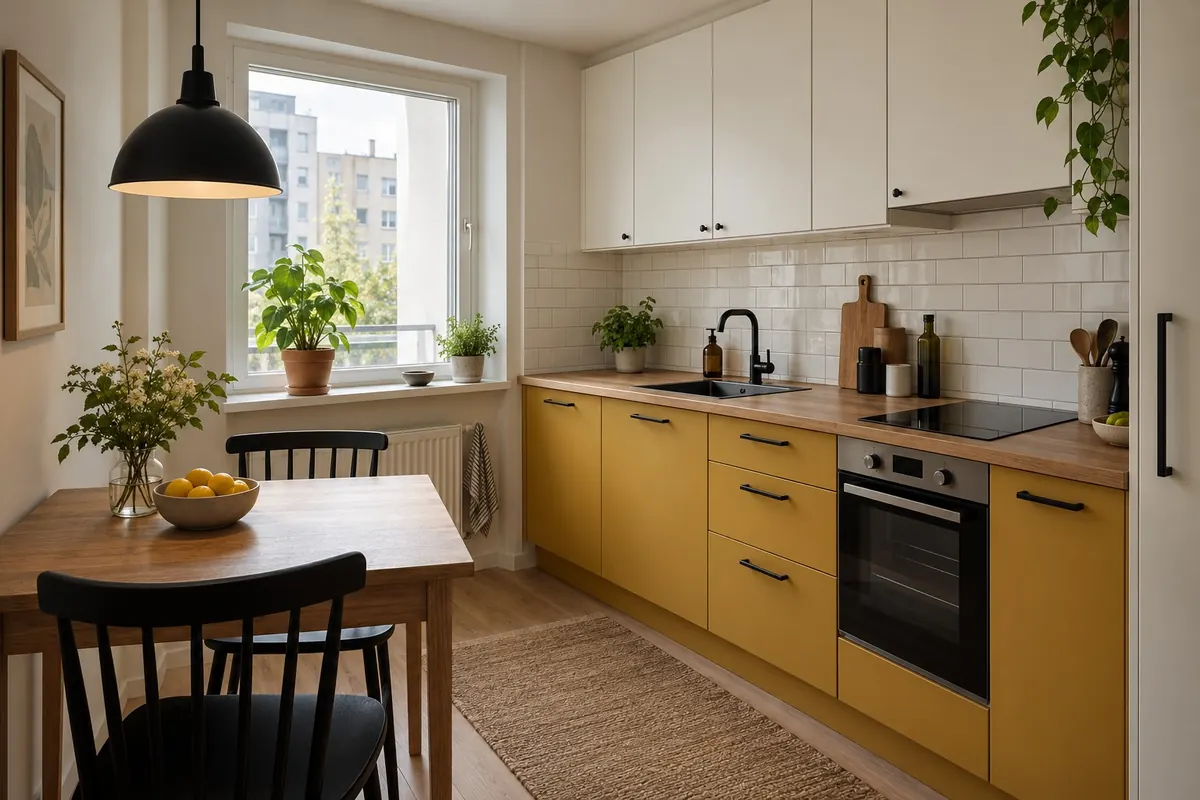
A common yellow kitchen has yellow lower fronts, white upper cabinets and a wooden countertop. If the floor is orange-toned and the under-cabinet lights are warm, yellow fronts drift toward orange in the evening. For a kitchen like that, take mustard or ochre, and choose neutral lighting over the countertop. A black and yellow kitchen works when there is little black: handles, the sink, a lamp over the table. Black fronts next to yellow ones start to compete. Other combinations of fronts, backsplash and walls are in our article on kitchen color.
Bedroom
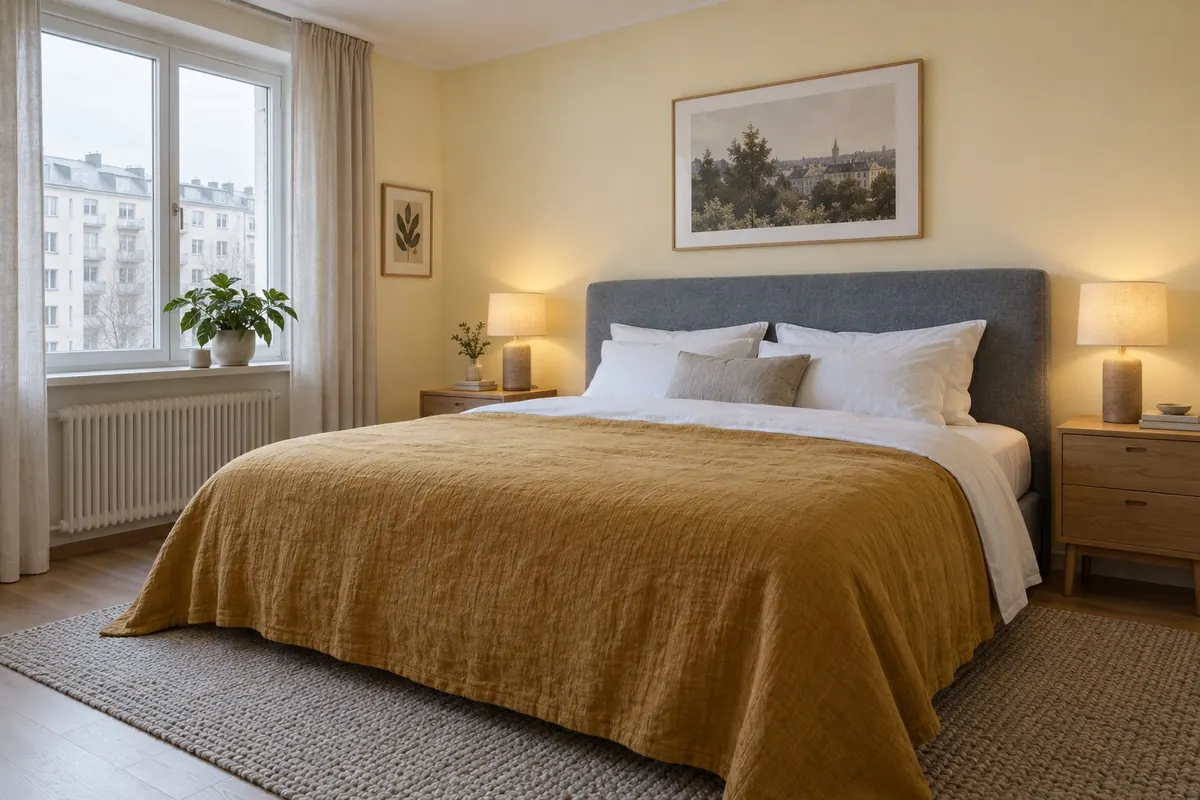
A bedroom usually needs only a light yellow on the walls and one deeper shade in textiles, such as an ochre bedspread. Bright yellow wallpaper behind the bed feels too energizing in the evening for many people, while light cream works as a warm background. A gray-blue headboard or curtains balance the warmth. Everything else about the bedroom, from the bed to storage and lighting, is in our article on bedroom design.
Living room and hallway
In a living room, yellow most often comes in through a sofa, an armchair or curtains. If the walls are already yellow, choose gray, blue or wooden furniture. In a windowless hallway, a light warm yellow on the walls makes it look brighter. The lamps next to it are better kept at one color temperature.
How to try yellow on a photo of your room?
Repainting yellow walls takes time: a saturated yellow often goes on in three or four coats. So it is easier to see the shade on a photo of your room first.
- Take a photo of the room in daylight so the walls, floor and window are in the frame. How to shoot it is explained in our article on photographing a room.
- Upload the photo to Desow Smart Edit, select the wall and describe the color: "ochre walls" or "light creamy yellow walls".
- Compare 2-3 shades on the same shot. One edit costs 7 credits, and the free credits on the Free plan cover several comparisons. A result usually takes less than a minute. Smart Edit works in a desktop browser; it is not available on phones yet.
- Check the finalist with a paint sample on the wall: a screen shows the shade only approximately.
If you want to see the whole room with mustard in furniture and textiles, run Redesign in the Mid-century or Dopamine style.
Frequently asked questions
Which yellow should I choose for the walls of a small room?
A light, warm one: cream, vanilla, light straw. Leave the ceiling white. In a small room, a saturated mustard or ochre goes on one wall or into textiles.
What does mustard go with in interior design?
Navy, teal, gray, olive, mid-tone wood and cream. Mustard looks worst next to cool white and an orange-toned floor: in the first case it looks dirty, in the second, orange.
Is yellow wallpaper a good idea for a bedroom?
Light cream and straw wallpaper without a large pattern works. Bright yellow wallpaper behind the bed shifts toward orange under warm lamps in the evening, and the bedroom feels too energizing.
Why does yellow paint cover a wall poorly?
Bright yellow pigments hide the surface underneath poorly, so a saturated yellow often needs 3-4 coats. A primer tinted light yellow or creamy white helps.
Can I repaint a wall yellow on a photo for free?
Yes, to start with. The Free plan gives you free credits once at sign-up, and one color change in Smart Edit costs 7 credits. On the Free plan the result is up to 1K with a watermark, which is enough to compare shades.
Key takeaways
- For walls, take cream, straw or light ochre; mustard goes into furniture, textiles or one wall; lemon into small things.
- Yellow looks brighter on a wall than on the chip: pick one step lighter and make a test patch at least letter-size.
- North-facing rooms need warm yellows without a green undertone; south-facing rooms suit cream or yellow in textiles.
- An orange-toned floor and warm lamps push yellow toward orange.
- A saturated yellow often takes 3-4 coats over a tinted primer, so compare shades on a photo in Smart Edit first.